


When Should You Rebrand Your Small Business?


Most businesses don’t struggle because of their product.
They struggle because their brand no longer matches the value of what they sell.
This happens quietly. Sales slow down. Growth stalls. Confidence drops. You start wondering whether the problem is pricing, marketing, or the economy.
Often, it’s branding.
Rebranding isn’t about changing colors or fonts. It’s about aligning perception with value so customers trust your business instantly.
Here are the biggest signs it might be time.
1. Your business has grown, but your brand hasn’t
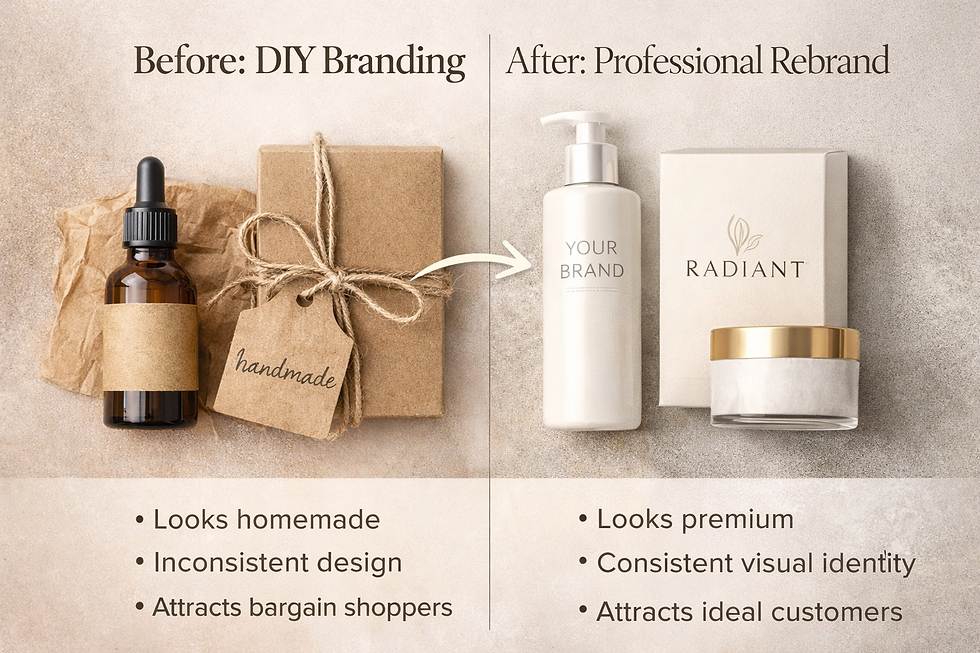
Many small businesses start with DIY logos, Canva packaging, or temporary labels.
That’s normal.
But if your product quality has improved while your branding still looks “startup,” customers feel that mismatch.
And mismatched brands lose trust.
2. Your packaging doesn’t match your pricing
If you’re raising prices but your packaging still looks handmade or inconsistent, customers hesitate.
Packaging communicates value before your product is even used.
This is especially true in:
skincare
wellness
food products
handmade goods
Customers buy with their eyes first.
3. Your brand identity is inconsistent
This is one of the most common small business branding problems.
Your:
website looks one way
packaging looks another
social media looks different again
Inconsistent brands feel unreliable — even when the product is excellent.
Consistency builds trust faster than marketing.
4. You’re attracting the wrong customers
If customers constantly:
ask for discounts
compare you to cheaper competitors
misunderstand your product
your branding may be positioning you incorrectly.
Branding determines who you attract, not just how you look.
5. You want to enter retail or wholesale
Retail-ready packaging requires:
clear hierarchy
compliance-ready labels
shelf visibility
strong brand recognition
DIY branding rarely performs well in retail environments.
This is where strategic packaging design becomes critical.
6. Your business feels “stuck”
This is what I call the DIY brand ceiling.
Revenue plateaus. Marketing feels harder. Nothing looks cohesive.
The business isn’t broken — the brand foundation just hasn’t evolved.
7. You’re ready to be taken seriously
Rebranding often happens when a founder decides:
“This isn’t a side project anymore.”
Professional branding signals stability, confidence, and long-term vision.
Customers respond to that immediately.
Branding Is a Growth Tool — Not a Design Upgrade
Rebranding isn’t about aesthetics.
It’s about:
trust
clarity
positioning
perceived value
conversion
The strongest brands don’t just look better — they make buying easier.
If you’re unsure whether your brand is helping or hurting your growth, you can explore more branding resources on MadeByGreta here:
Frequently Asked Questions (FAQ)
How do I know if my business needs a rebrand?
If your business has grown but your visuals, packaging, or messaging still look DIY or inconsistent, a rebrand may help align your brand with your current value.
What is the difference between a logo and brand identity?
A logo is one visual element. A brand identity includes typography, colors, packaging, messaging, and visual consistency across all platforms.
Can rebranding increase sales?
Yes. Strategic branding improves trust, perceived value, and conversion rates, which often leads to increased revenue.
When is the best time to rebrand?
Common moments include:
preparing for retail
raising prices
launching new packaging
repositioning your business
outgrowing DIY branding
Is packaging part of branding?
Absolutely. Packaging is one of the strongest brand touchpoints because customers physically interact with it.


Comments